

A giant serpent that encircles the world of Midgard, Thor's assassin… Jörmungand plays a central role in Norse mythology. Today we will introduce you to this legend!
In this article, we will cover everything you might want to know about this famous monster. We will talk about its family, its life, and, of course, the three surviving Norse myths involving the Midgard serpent.

Jörmungand, giant serpent son of Loki
Jormungand was one of the most powerful and wild creatures of all Norse mythology. Its name means "huge monster", and the creature is also known as the World Serpent or the Midgard Serpent.

39,99€
50,00€
The Serpent also plays one of the key roles during Ragnarök, where it is destined to face none other than the God of Thunder himself. But, we will come back to that a little later.
The Origins of Jörmungand
As with many other gods and creatures of Norse mythology, Snorri Sturlusson's prose and poetic Eddas are the oldest sources of information about the Midgard serpent. In case you didn't know, these writings date back to the thirteenth century!
The main source of information for myths involving Jormungand consists of the Eddic poems Völuspá and Hymiskviða as well as the skaldic poem Húsdrápa.
However, there might be other sources of information about Jormungand even older than the Prose and Poetic Edda. Some stone carvings date from before the 13th century but are so worn that it is impossible to be sure they actually depict the Serpent of the word.
After all, it seems we must stick to the Prose and Poetic Edda.
The Family Tree of Jörmungand
The Midgard serpent was the second child of Loki, the Norse god of cunning and mischief, and a giantess, Angrboda. Since Loki's parents are thought to have actually been giants, Jormungandr can naturally be considered a giant as well.
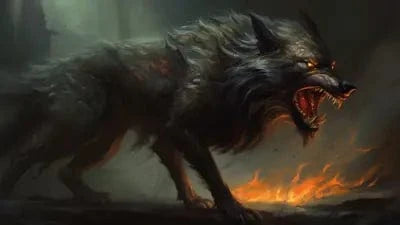
The Serpent had two famous siblings: Hel and Fenrir the Wolf. Hel was the ruler of Helheim, the realm of the dead, while Fenrir is known for two things. First, he tore off the hand of the Norse god of war, Tyr, and second, he killed Odin, the All-Father, during Ragnarök.
All things considered, if you say that Loki’s offspring were the harbingers of Ragnarök, you would not be wrong.
Feel free to watch this video to learn more about the giant serpent.
The Anecdotes of Jörmungand
Now that we have described the beast, it is time to tell you about the different roles it has played in the Viking universe.
Jörmungand and Ragnarok
Now, let’s talk about the famous prophecy of Ragnarök and Jormungand’s role in it.
It was predicted that Ragnarök will begin when the Midgard Serpent releases its tail. Jormungand will rise from the dark depths of the ocean and flood the seas over all the land. The water will allow the Naglfar ship to sail freely over the flooded lands.
The Naglfar was built with the fingernails and toenails of dead men and women, and it carried an army of giants. The ship’s captain will be Loki, who will manage to free himself from his bonds.
Jormungand’s brother, Fenrir the Wolf, will run across the entire earth spreading fire from his nostrils and eyes and devouring everything in his path. The World Serpent will use its venom to poison the water, the earth, and the air.
Odin was so afraid of this prophecy that he threw Jormungand into the dark depths of the ocean while the Serpent was still very young. As time passed, Jormungand grew. Eventually, the Serpent became so large that it held its tail in its mouth and encircled all of Midgard. This is how Jormungand got its name – the World Serpent or the Midgard Serpent.
Jörmungand today
The Midgard serpent is an example of an ancient symbol called Ouroboros. This symbol represents a dragon or serpent eating its own tail and forming a circle. The Ouroboros represents the eternal cycle of life and death or creation and destruction. The symbol can be found on many Viking jewelry pieces today.
We are sure you understand why it is not surprising that the symbol of the Ouroboros is used to describe Jormungand nowadays. The role of the Serpent in Norse mythology was to trigger Ragnarök and bring destruction to the entire Norse universe. However, the destruction of the old world will also lead to the creation of a new world.
We can also note that one of the most famous tattoos today is the Ouroboros.
The Giant Serpent and Thor
Only three myths recount Jormungandr's encounters with his sworn enemy, the thunder god. It's time to tell you about these stories.
1. THE FISHING SESSION
Let's start with a myth known as "The Fishing Party."
During a time of peace, Ran and Aegir, two kind giants living under the sea, invited the Gods to a feast. The Gods had to bring a cauldron large enough to brew mead for all the guests. Since the guests were to be gods and giants, this was a real challenge.
After nearly giving up, the Gods remembered a giant who had a cauldron large enough to brew mead for everyone. The giant was named Hymir. At the time, Thor was young and reckless, and he volunteered to go to the realm of Jotunheim and ask Hymir to lend him the cauldron.
The giant was an excellent host and, knowing Thor's legendary hunger, he killed three bulls to have enough food during Thor's visit. However, Thor's appetite was once again underestimated. He ate two bulls in a single meal, and Hymir realized that the bulls he had killed would not be enough. Since he did not want to kill more of his cattle, he told Thor they would go fishing tomorrow.
The next morning, the giant sent Thor to get bait for fishing. The young God returned with the remaining bull heads from Hymir. Hymir was very angry, but since he was afraid of the young God, he preferred to say nothing, and both set off to fish on the giant's boat.
Thor used his divine strength to quickly bring them to Hymir's fishing spot. It turned out the bull's head was excellent bait. Hymir was in a good mood because he had managed to catch two whales in a short time. However, Thor was not fishing but merely watching the horizon, which annoyed Hymir.
After a while, the giant told Thor they had enough food and could return to shore. But Thor had other plans in mind. He started rowing further out into the ocean. Hymir, increasingly nervous, reminded Thor that they were entering Jormungandr's territory.
The thunder god, stubborn as he was, ignored Hymir's warning and kept rowing while carefully watching the waves around them. Finally, Thor stopped the boat. He took the biggest hook, placed a bull's head on it, and his legendary fishing adventure was about to begin.
A few moments later, something pulled Thor's line so hard that he barely managed to stay on the boat. In no time, the young God regained his composure and began reeling in his catch.
Hymir noticed that Thor was using all his divine strength to pull his catch out of the water. The giant knew that only one creature in the ocean was powerful enough to test the young God. It had to be Jormungandr. Moreover, Hymir knew that if he allowed Thor to pull the Midgard serpent out of the water, Ragnarök would begin.
The giant nervously watched the epic battle between the invisible sea monster and the mighty Thor. It seemed the young God was going to win. Finally, Jormungandr's head emerged from the water, and the Thunder God grabbed Mjollnir.
In the blink of an eye, the giant took his knife and cut the fishing line. The Midgard Serpent fell back into the depths of the ocean, creating huge waves that nearly destroyed Hymir's boat.
Thor was so angry that he threw the giant into the ocean. The young God rowed to the shore and left his catch in front of Hymir's house. Then, he took the cauldron he had come to borrow and returned to Asgard.

2.LIFTING THE CAT
The following myth, which tells the story of Thor's encounter with Jormungand, is known as "Lifting the Cat."
Once upon a time, Thor and Loki were traveling in Thor's chariot, far from Asgard. Their destination was the giants' lair, Jotunheim.
Shortly after their arrival in Jotunheim, they came across a vast castle. The castle door was closed, and there was no one to open it. The door was so large that Thor and Loki could easily pass between its bars. They entered the castle and came upon a hall where giants were feasting.
On a throne inside the hall sat a giant called Utgarda-Loki (in Old Norse Útgarða-Loki), who was the king of the castle. He recognized his guests and began insulting them for their small size.
After a series of challenges that Loki and other members of their group lost, it was time for Thor to fight for the honor of the Gods.
After failing to win a drinking contest, Thor's next challenge was to try to lift the king's cat off the ground. But the mighty Thor did not succeed either. Thor lost another contest before Utgarda-Loki announced that it was enough challenges for one night.
The next morning, Thor and Loki were preparing to leave, and Utgarda-Loki was showing them the exit. Once outside the castle, the king told them what had really happened the previous night. He told Loki and Thor how he had trapped them.
During the drinking contest, one side of the drinking horn used by Thor was connected to the ocean, and at one point, the giants feared that Thor would not stop until their entire ocean had disappeared. On the other hand, the cat that Thor tried to lift was actually Jormungand, the world serpent.
Thor felt so humiliated and angry to have been trapped like that that he wanted to kill Utgarda-Loki on the spot. He took his hammer and turned around to end the king’s life, but there was nothing behind him. There was no trace of the castle or Utgarda-Loki, just a vast empty field. And just like that, Thor was tricked once again.
3.RAGNARÖK
The final confrontation between Jormungand and Thor took place during Ragnarök, the ultimate battle the gods of Asgard fought against the giants of Jotunheim.
It has been foretold that the Midgard Serpent itself will be the one to trigger the series of events leading to Ragnarök.
It will begin with the harshest winter in the history of the Nordic universe, lasting three years. Jormungand will feel uneasy in the cold, dark depths of the ocean. The serpent will finally release its tail and head straight to the surface.
The movement of Jormungand will cause unimaginable earthquakes in the nine realms, which will eventually break the magical bonds that held Fenrir and Loki captive. Shortly after, Loki and his children will head toward the realm of the gods, Asgard.
Loki will command an army of giants seeking to kill all the Norse gods. Meanwhile, Fenrir the Wolf will spread fire and destruction throughout the Nordic universe. He will run with his mouth wide open and devour everything in his path, even the mighty Odin himself. Finally, the World Serpent will poison the earth, air, and water with its terrible venom.
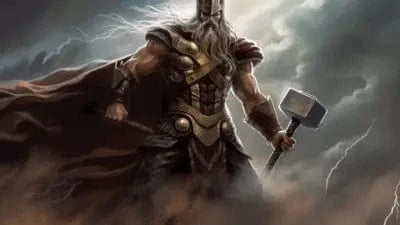
In the end, the mighty Thor will fight to reach his sworn enemy, Jormungand. The battle was something to behold. Thor fought like never before and finally managed to kill the greatest serpent that ever existed. Unfortunately, the wounds inflicted by Jormungand were so severe that the powerful God could only take nine steps before collapsing. After a few seconds of agony, Thor, the god of thunder, met his death.
We leave you with a piece of music in honor of the serpent.
The final word
Jörmungand holds such an important place in the Nordic universe that it was essential for us to write an article about its story. Among our creations, you will find jewelry bearing the image of the giant serpent.
The Ouroboros symbol holds a very important place, so we also asked our graphic designer to draw it so we could offer it on these accessories; we leave it to you to go see and order yours.
Hop hop hop, climb aboard your ship young Viking, heading to Gullfaxi, the golden horse to learn more about the Vikings.
Thank you for reading us, and see you soon!