
YGGDRASIL, THE COSMIC ASH
In Norse mythology, there is talk of a giant and mystical tree that supported the 9 worlds that make up the universe. A cosmic tree whose highest branches touch the heavens and whose roots sink deep into the underground worlds. This is the world tree, Yggdrasil. (That’s awesome)
It is supported by three enormous roots. These three roots maintain the shape of the cosmos that make up the world in Norse mythology. The first is located in Asgard, the second reaches the end of Jotunheim, and the third, to Niflheim.
Here is a video from Azura that perfectly summarizes the legend of Yggdrasil.
BEARER OF THE 9 WORLDS
As mentioned earlier, Yggdrasil supports the 9 worlds; to better understand the Norse mythology, let yourself be immersed in the universe of each of these worlds.

39,99€
50,00€
ASGARD

Located at the top of Yggdrasil, Asgard is the realm of the Aesir gods, ruled by the powerful Odin (the father of all things). Surrounded by a great wall, once built by a master giant builder, and his magical horse, Sleipnir.
To enter these walls, the only passable path was the Bifrost, the famous rainbow bridge, often featured in cinema such as in the Marvel Thor films. The bifrost was, according to legends, made of three threads of fire, braided by the gods. It was made this way to prevent giants from crossing the bridge, burning them instead. The only way to cross it was for the god Heimdall, guardian of the bridge, to open it.
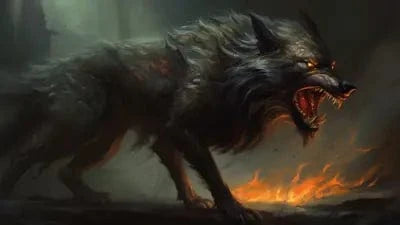
It is also the place where Fenrir, the giant wolf, is imprisoned until Ragnarok, when he will finally be freed.
Valhalla is also located in Asgard, the place where warriors fallen in battle are brought before Odin at the moment of their death.
Asgard has been heavily featured in the cinematic universe of recent years, particularly in Marvel films. It is very well represented there, and in this film series, several references to Norse mythology such as Yggdrasil, the Bifrost, and Midgard can be found.
VANAHEIM

Vanaheim is located on the upper branches of Yggdrasil, at the same level as Asgard. It is home to the Vanes, the second family of gods, the lesser known of the two.
Often described as a dark place, its inhabitants consider war an art and face death without fear. Courage, honor and glory are honored, social status there is dictated by victories in combat.
The Vanes, representing fertility and nature, have long been at war with the Aesir, inhabitants of Asgard. This war, relatively short and offering no winner to either family, ended with a truce. Indeed, an agreement was established between the two families: the marriage of the giant Aesir, Skadi and the Vanir god, Njörd.
This truce also led to an exchange between certain gods. The Vanes sent Njörd, Freyr, and Freya, and the Ases sent Honir and Mimir. This exchange, judged unsatisfactory by the Vanes (3 against 2), they decapitated Mimir and sent his head to Asgard. This act did not create more tension, and nevertheless ended the war.
ALFHEIM

Then, there is Alfheim, also located near Asgard, in the upper part of Yggdrasil, it is the world of the light elves. The light elves were fairy beings of incredible beauty and grace. They radiated like the sun and possessed immense magical powers. The ruler of Alfheim was Freyr, the god of fertility.
According to legends, Alfheim could be two different places. Either it was, as indicated above, the world of the elves, or the residence of Freyr.
In the second legend, Alfheim was a gift from the gods to Freyr when he cut his first tooth. However, this legend contradicts the great myth of the war between the Ases and the Vanes. Indeed, according to this legend, Freyr played a very important role in the war and was exchanged at the end of the war. During this journey, Freyr was already an adult. If we believe the second legend, the gods gave him a world during his childhood.
Apart from this question, very little information has been found in Norse myths about Alfheim.
MUSPELLHEIM

The infernal world, covered with lava and flames. It is located at the intermediate level of Yggdrasil, at the same level as Midgard and Svartalfheim.
It was the domain of the giant Surt. Armed with a blazing sword, he annihilated the worlds with his burning flames. He will lead the Yötuns during Ragnarok. It is said that his sword was brighter than the sun and that he will make Asgard blazing, invaded by flames that ravage everything in their path.
It is one of the two original worlds of the Norse universe, along with its opposite, Niflheim. This opposition created the giant Ymir, when the flames of Muspellheim melted the ice of Niflheim.
There are few myths about Muspellheim, as this world was rarely mentioned in legends. It simply had enormous importance during Ragnarok, when Surt destroyed the 9 worlds with his blazing sword.
According to myths, after this destruction, the sparks of Muspellheim became the sun, the moon, and the stars of our world.
NIFLHEIM

Niflheim was the absolute opposite of Muspellheim. It is located at the intermediate level of Yggdrasil. It was a dark world, covered with ice, where cold reigned supreme. With its icebergs, ice mountains, and frozen rivers that cross the world.
As mentioned earlier, Ymir was created when the flames of Muspellheim melted the ice of Niflheim.
Apart from this fact, Niflheim does not appear in any mythological poems.
Niflheim is often confused with Niflhel, which is part of the realm of Helheim.
It is said that the water source that nourishes Yggdrasil, Hvergelmir, was located in this world. This water source is guarded by a terrible dragon. (No less).
HELHEIM

Territory of the goddess Hel, it is the realm of the dead. It is a cold and dark world, often associated with Niflheim. It is the world that welcomes those who died of old age or diseases. Half of those who died in battle were sent to Valhalla, in Asgard. The other half was sent to Folkvangr, a plain located in Helheim, guarded by the goddess Freya.
According to the myths, the dead were sent either to Folkvangr or to Nifhel, guarded by the dog Garm, in his cave Gnipahellir.
Once entered into Helheim, it was impossible to leave. Indeed, Helheim is surrounded by a great river, Gjoll, which even the gods cannot cross.
Christian influence transformed this place into a passage for humans who sinned during their life. Gradually, the Helheim became hell. It is this distortion that gave the English name for hell, "hell."
The icy wind of this world is created by the giant Hraesvelg (we'll spare you if you can't pronounce it). This giant could transform into an eagle and produce an icy wind by flapping its wings.
SVARTALFHEIM

Also known as Nidavellir, it represents the world of the dwarves. According to versions of the myths, these two worlds were distinct. In this version, Nidavellir represents the world of the dwarves and Svartalfheim represents that of the dark elves.
In both versions, the world of the dwarves was a dark world covered with mountains rich in minerals. Experts in forgework, and skilled with their hands, the dwarves who lived in this world made most of the magical objects owned by the gods, such as Odin's famous spear, or Mjollnir, Thor's hammer.
Even though the term has been distorted in recent years, the dwarf is not a short man, it is a completely different race from humans. They were born from maggots gnawing on the corpse of Ymir, the first giant.
The gods found the dwarves too ugly, so they made them live underground, so that no one could see them anymore (a strange way to thank them for making their weapons).
This world is located halfway up the ash tree Yggdrasil, near Midgard.
JOTUNHEIM

This is the world of the giants, left to the giants by Odin just after the creation of the first giant, Ymir. In this world, covered with dancing forests and giant rocks, stands the fortress of Utgardar, an imposing citadel made of ice and snow, whose summit was known to be impossible to see. It is there that Utgardar Loki, the king of the giants, resides.
Other citadels can also be found there such as:
- Gastropnir, where the giantess Menglad resides
- Tryheim, also called the "Home of Tumult"
- The giant city Thaizi, founded in the mountains
It is also in Jotunheim that the source of infinite wisdom is found, guarded by Mimir.
It is located at the intermediate level of Yggdrasil.
Bergelmir and his wife were created in Jotunheim, to avenge the death of Ymir, during Ragnarok.
MIDGARD

The world of humans, Midgard, was roughly similar to our world today; on this world lived men who simply lived their lives normally. Those who were born, grew up, worked, married, and so on until their death. The biggest difference comes from the fact that compared to our world, Midgard was surrounded by a huge cosmic ocean that housed the giant serpent Jormungand, son of Loki.
The only way out is to take the Bifrost, a rainbow bridge, woven from three strands of fire by the gods, which separates Midgard from Asgard. Since the bridge is on fire, no human or giant can cross it, only the gods can, which is why this bridge serves only one of the two worlds.
It is located right in the middle of Yggdrasil, as indicated by the root "Mid" of Midgard.
CREATION OF YGGDRASIL, THE COSMIC TREE

Yggdrasil is said to have been created by Odin, creator of all things (it is partly thanks to this creation that this nickname was given to him). Myths were only passed down orally at the time, very few texts allow us today to confirm all this information. However, the creation of the cosmic tree remains one of the rare legends about which there is only one version.
Before that, the different worlds already existed, but there was no structure to hold them (the universe). Before telling the story of Yggdrasil, it is important to tell that of Ymir, the main actor of this work. He was created when the icy winds of Niflheim met the burning flames of Muspellheim. This giant was used by Odin, indeed, he used his blood to build Yggdrasil. However, we have very little information about this creation process, we only know that the roots of the cosmic tree were created inside Ymir’s body.
The three-level structure we know today has always existed, each level having three worlds, with Midgard at its center, allowing the balance of the other eight worlds.
THE RAGNAROK

Yggdrasil was completely impacted by Ragnarok, associated with the end of the world. This tragic event was caused by Surt, the giant, ruler of Muspellheim. It began with three consecutive winters, where men entered a terrifying war. At the end of these three winters, the sky opened revealing the brightness of Surt’s sword. At that moment the sons of Surt appeared to attack the different worlds.
When Heimdall realized this disaster, he blew into the Gjallarhorn, which made the ash tree tremble and awakened all the gods. A war broke out, causing many deities to perish. This event created many myths, battles between different gods or giants, notably the one of Odin against Fenrir or that of Thor against Jörmungand, Loki’s serpent.
YGGDRASIL AND ODIN'S HALL
Thank you for reading me, it is a pleasure to write for Odin's Hall, the reference brand in accessories derived from Norse mythology.
You can visit our Yggdrasil collection to find a piece of jewelry representing the tree of life.
To go further, you can continue reading our blogs on Norse deities by starting with Odin for example.
You can also leave if you want, but I must admit we prefer that you stay on our site a little longer.
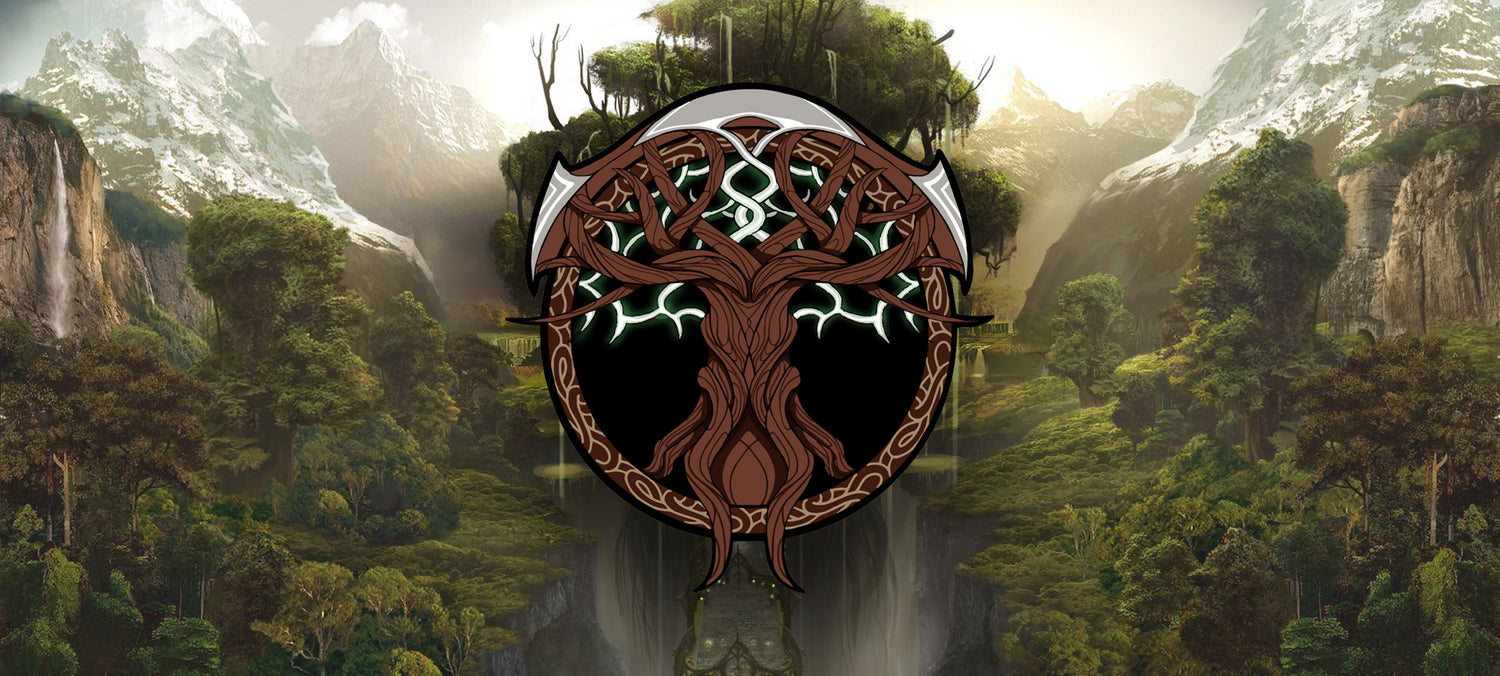
Let me tell you a bit about our logo if you want ! At Odin's Hall we wanted to have our own logos representing the strong symbols of Norse mythology, and Yggdrasil has its own of course. I put it just below.
SKOOOLL! Thanks to the world tree! Yggdrasil
Climb into your drakkar and sail on our site: